
How to Lose Weight Without Losing Muscle in Dubai
Can you lose weight without losing muscle? You can take practical steps to reduce muscle loss, but no responsible plan can promise that every kilogram lost will come only from body fat. For a busy person in Dubai or Abu Dhabi, the goal is to combine a sustainable eating plan with strength work and regular movement—without depending on long daily workouts.
Muscle matters for strength, daily function and the way your body performs. That makes preserving it an important part of weight management, not just a concern for bodybuilders.
Why can muscle be lost during weight loss?
When body weight falls through dietary changes, the change can include both fat mass and fat-free mass. A recent systematic review and meta-analysis of adults with overweight or obesity found that adding resistance exercise to dietary weight loss helped preserve fat-free mass, improved strength and increased fat-mass loss compared with diet alone.
This does not mean you need an extreme training schedule. It means resistance work deserves a place in your week while you manage your food intake.
1. Use strength training as an anchor
The World Health Organization recommends muscle-strengthening activity involving the major muscle groups on two or more days a week, alongside weekly aerobic activity. If you currently do none, start with a manageable session and build from there.
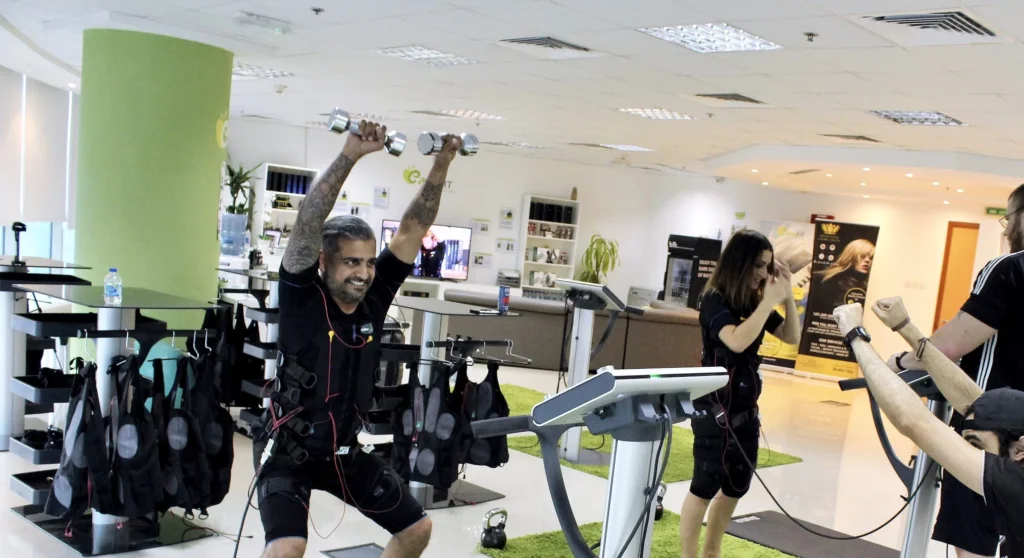
Strength work can include weights, resistance bands, bodyweight movements or trainer-led EMS. The best option is one you can perform safely and repeat. A calendar appointment is often easier to protect than a vague plan to exercise “when work is quieter.”
2. Understand where EMS may fit
Whole-body EMS adds electrical impulses while you perform guided movements. At Easy Fit, the coached EMS workout itself takes about 20 minutes; allow additional time for changing, speaking with your trainer and travelling to the studio.
A systematic review of whole-body EMS studies reported positive pooled effects for muscle mass and strength in non-athletic adults. The studies varied in their participants, schedules and duration, and the pooled effect on total body fat was not statistically significant. That is why EMS is best presented as a time-efficient form of resistance exercise—not as a guarantee of fat loss or a replacement for every other kind of activity.
If you are deciding between training formats, see our practical comparison of EMS and gym training for a busy Dubai week.
3. Keep aerobic movement in the week
Strength training is only one part of the picture. WHO recommends that adults work toward at least 150 minutes of moderate-intensity aerobic activity each week, or 75 minutes of vigorous activity, or an equivalent combination.
You can divide movement into realistic blocks. A brisk 15-minute walk before work and another after lunch can be easier to schedule than one long session. Indoor walking at a mall or on a treadmill can help when heat, humidity or air quality makes outdoor activity uncomfortable. Begin with what is safe and realistic, then gradually add time.
4. Choose an eating plan you can maintain
The US National Institute of Diabetes and Digestive and Kidney Diseases recommends a healthy eating plan that can be maintained over time. Its examples include vegetables, fruit, whole grains and protein foods such as lean meat, eggs, seafood, beans, lentils, nuts, seeds and soy foods.
For a busy workday, consistency matters more than a complicated menu. Choose two or three lunches you can reliably bring or order, include a suitable protein food, and keep a practical option ready for meetings that run late. A registered dietitian can help if you need an individual calorie or protein target, particularly if you have a medical condition.
A realistic week for a busy schedule
Use this as a planning example, not a prescription:
- Monday: two 15-minute brisk walks.
- Tuesday: one trainer-led EMS appointment or another resistance session.
- Wednesday: 30 minutes of brisk walking, divided if needed.
- Thursday: a second resistance session using weights, bands or bodyweight exercises appropriate for you.
- Friday: two 15-minute walks between work and family commitments.
- Weekend: one or two longer walks or another aerobic activity you enjoy.
This structure gives strength work a fixed place while movement accumulates across the week. Adjust it for your starting point, health and schedule. Our busy-schedule weight-management guide has more ideas for making the routine easier to repeat.
Track more than the number on the scale
Daily body weight can move for many reasons, so review the longer trend. Also note whether you attend your sessions, whether planned meals are becoming easier, and whether your strength or exercise technique is improving. These measures can show progress even when one weigh-in is frustrating.
If you have a health condition, take medicines that affect weight or appetite, or are unsure whether EMS or a new exercise plan is suitable, speak with a healthcare professional. Tell your trainer about relevant health history before your first session.
Frequently asked questions
Can EMS prevent all muscle loss while I lose weight?
No method can guarantee that. Research supports resistance exercise as a useful way to reduce fat-free-mass loss during dietary weight loss. EMS can be one resistance-training option within a broader plan.
Do I need to train every day?
No. A useful starting structure is scheduled strength work plus aerobic movement spread through the week. Build gradually toward public-health activity guidance instead of treating the plan as all or nothing.
Can I try Easy Fit before choosing a membership?
Yes. Book an Easy Fit EMS trial session in Dubai or Abu Dhabi. The booking page displays the current price before payment. If you are new to EMS, read how to prepare for your first session.