
EMS Training Results: How Long Does It Take?
EMS training results develop over repeated sessions. Research supports improvements in muscle mass and strength, while changes in weight and appearance depend on your starting point, training programme and everyday habits. There is no reliable deadline that applies to everyone.
If you are starting EMS training in Dubai or Abu Dhabi, agree on a baseline and a review date with your trainer. An 8–12-week progress review can be a useful planning checkpoint. It is a chance to assess your own progress and adjust the plan, rather than a promise of a particular result by that date.
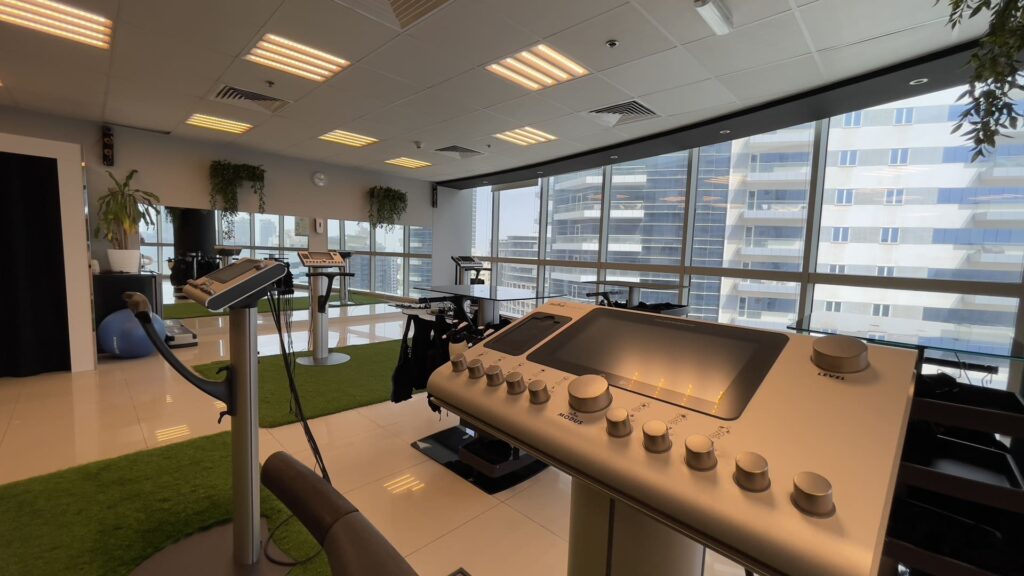
At Easy Fit, the EMS workout itself takes about 20 minutes and is guided by a trainer. Allow additional time for changing, discussing your goals and getting to the studio.
What does the research tell us about EMS results?
A 2021 systematic review and meta-analysis of controlled studies found improvements in muscle mass and strength with whole-body EMS. Its combined finding for total body fat was not statistically significant. Training programmes varied considerably: studies lasted 6–54 weeks and used different weekly schedules.
A 16-week randomized trial also found improvements in lean body mass and leg strength in healthy, previously untrained men. That EMS programme used three sessions every two weeks. It helps show that repeated training can produce measurable changes, but it does not establish a result deadline for a different person or a once-weekly programme.
The useful takeaway is to define the result you want to measure. Getting stronger, changing your waist measurement and losing body weight are different goals, with different ways to assess progress.
A practical way to review your first 12 weeks
Use the schedule below as a conversation plan with your trainer. These are review points you can choose, not predicted milestones.
| Review point | What to focus on | What to record |
|---|---|---|
| Before starting | Choose one main goal and a starting point | Your goal, agreed measurements and a suitable exercise benchmark |
| First few sessions | Become familiar with the suit, movements and manageable intensity | Attendance, how the session felt and recovery |
| Around week 4 | Check whether the routine fits your week | Sessions completed, exercise notes and any barriers to attendance |
| Around weeks 8–12 | Review the trend and agree the next step | Repeat the starting measurements and discuss progress with your trainer |
For a strength goal, your trainer might use a repeatable exercise with the same movement, range and technique. For a body-composition goal, you might also record waist measurements and optional photographs taken in consistent conditions. Pick a few useful measures you can repeat.
A missed appointment is useful information when reviewing the plan. Record the sessions you actually completed so your review reflects the training you received.
How to measure progress beyond one weigh-in
Keep a simple record that matches your goal:
- Training consistency: write down completed sessions and the weekly appointment you can realistically maintain.
- Exercise performance: record the exercise, repetitions, technique and effort your trainer asks you to track.
- Waist measurement: use the same tape position and similar measuring conditions each time.
- Optional progress photos: use similar lighting, clothing, distance and posture.
- Body weight: if you choose to track it, use the same scale at a consistent time and review a pattern over several readings.
If you use a studio body-composition assessment, ask how to prepare for repeat measurements and how to interpret its estimates. Keep the testing conditions consistent and discuss changes alongside your other records.
You can also browse Easy Fit customer results and experiences. Individual testimonials describe those customers’ experiences; your own progress needs its own baseline and review.
What affects the time it takes to see changes?
A programme you can attend. In a busy Dubai or Abu Dhabi week, travel time matters. Choose a studio and appointment you can keep, including during demanding work weeks.
Appropriate training and recovery. Your trainer should adjust the session to your experience, goals and response. Turning up the intensity or adding extra EMS appointments is a decision to discuss with them.
Habits between appointments. For weight-management goals, eating habits and everyday activity remain part of the plan. The US National Institute of Diabetes and Digestive and Kidney Diseases recommends a sustainable eating plan and regular activity to support weight management. A weekly EMS appointment can be one part of that routine.
Your starting point. Someone returning to exercise and someone who already trains regularly may need different goals and assessments. Ask your trainer to explain the measures that make sense for you.
For the broader weekly routine, our guide to EMS once a week for weight loss in Dubai covers movement and eating habits between sessions.
Should you train more often to get faster EMS results?
Follow a suitable programme with time to recover. The 2023 international WB-EMS guideline recommends a cautious introduction and limits beginners to no more than one session of up to 20 minutes per week during the first 8–10 weeks. It also recommends gradually building session duration and intensity.
Arrange your schedule with your trainer and share relevant health information before starting. If you have a medical condition or are unsure whether EMS is suitable, get medical advice before booking.
Questions to ask before booking EMS training in Dubai or Abu Dhabi
Ask the studio how the trainer will set your starting intensity, what progress measures they use and when they recommend reviewing the plan. Check how much time to allow for the full visit and what is included in the package.
At Easy Fit, you can explore EMS training and studio information, compare membership and trial pricing information, or go directly to the booking page to choose a studio and available time.
Book your Easy Fit EMS trial in Dubai or Abu Dhabi.
Come with one clear goal. Discussing it at the start gives you and your trainer something useful to work toward and measure.